1.Tumor boards provide:
Accurate and definitive decision-making through a multidisciplinary approach
Goal-directed and individualized treatment planning
Standardized selection of appropriate radiotherapy and chemotherapy protocols tailored to the patient
An evidence-based clinical decision-making process
2. Participants in the Tumor Board
Orthopedic oncologist
Musculoskeletal radiologist
Sarcoma pathologist
Medical oncologist
Radiation oncologist
Plastic surgeon
Nuclear medicine specialist
Interventional radiologist
Spine surgeon and/or vascular surgeon, when require
The members of the orthopedic oncology tumor board are presented in Table 1.
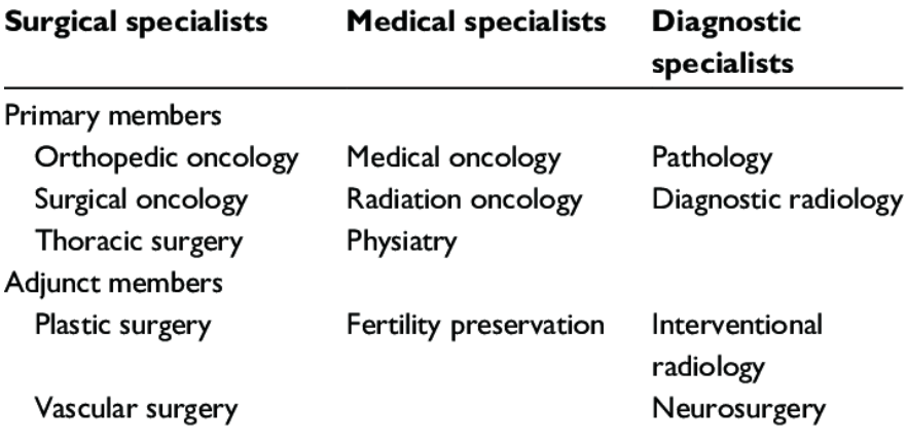
Table 1: Key members involved in the decision-making process of the orthopedic oncology tumor board.
3. Primary Objectives of the Tumor Board
Accurate diagnosis
Staging:
Evaluation of surgical resectability, determination of the need for neoadjuvant or adjuvant therapy, and assessment of the feasibility of limb-salvage procedures.Biopsy planning:
Determination of the biopsy tract and selection of either closed or open biopsy techniques.Surgical strategy:
Achievement of negative surgical margins, prevention of local recurrence, preservation of function, and establishment of stable reconstruction.Limb salvage versus amputation:
Multidisciplinary assessment of the feasibility and expected outcomes of limb-salvage surgery.Neoadjuvant and adjuvant treatment planning:
Integration of medical and radiation oncologists into the treatment process.Selection of reconstruction method
Management of complications
4. Factors Influencing the Decision-Making Process
Histological subtype
Tumor grade
Tumor size
Tumor localization
Relationship to neurovascular structures
Presence of skip metastases
Response to chemotherapy
Age
Performance status
Expected survival
Functional expectations
Comorbidities
Feasibility of achieving adequate surgical margins
Available reconstruction options
Risk of complications
5. Critical Tumor Board Decisions in Orthopedic Oncology
Biopsy Strategy
Tru-cut biopsy versus open biopsy
Limb Salvage versus Amputation
Determination of the feasibility and oncological safety of limb-salvage surgery
Neoadjuvant Chemotherapy and/or Radiotherapy
Assessment of indications for preoperative systemic therapy or radiotherapy
Pelvic Tumor Management Strategy
Selection of the most appropriate surgical and reconstructive approach for pelvic tumors
Decision for Spine Separation Surgery
Evaluation of the need for separation surgery in spinal tumors, particularly in the setting of epidural spinal cord compression
Surgical Indications in Metastatic Disease
Determination of surgical indications in patients with metastatic bone disease
6. Role of Imaging
Magnetic resonance imaging (MRI)
Computed tomography (CT)
Positron emission tomography–computed tomography (PET-CT)
Dynamic contrast-enhanced MRI
Evaluation of skip lesions
A musculoskeletal radiologist should be an essential member of the tumor board, and their interpretations should play a central role in the decision-making process.
7. Role of Pathology
Histological subtype
Tumor grade
Molecular markers
Limitations of frozen section analysis
Radiologic–pathologic correlation
8. Surgical Planning
En bloc resection
Surgical margin planning
Preservation of neurovascular structures
Extra-articular resection
Reconstruction algorithms
9. Impact of Tumor Boards on Survival and Clinical Outcomes
Improved local tumor control
Reduction in unnecessary surgical procedures
Decreased complication rates
More accurate biopsy planning and diagnosis
Improved functional outcomes
References:
1) Siegel GW, Biermann JS, Chugh R, et al. The multidisciplinary management of bone and soft tissue sarcoma: an essential organizational framework. J Multidiscip Healthc. 2015;8:109-115. doi:10.2147/JMDH.S49805
2) Pittarello C, Brunello A, Lamberti E, et al. Multidisciplinary approach to bone metastases: a single-center experience in a tertiary cancer center. Support Care Cancer. 2026;34(3):256. doi:10.1007/s00520-026-10476-6
3) Wiesel SW, Albert TJ, Malawer MM, Wittig JC, Bickels J, editors. Operative Techniques in Orthopaedic Surgical Oncology. 3rd ed. Philadelphia, PA: Wolters Kluwer; 2023.
4) Osman K, Ashford RU, Mangham DC, et al. A multidisciplinary team approach is highly effective in the management of nondiagnostic bone tumour biopsies: a 10-year retrospective review at a specialist sarcoma unit. Sarcoma. 2022;2022:7700365. doi:10.1155/2022/7700365
5) Siegel GW, Biermann JS, editors. Orthopaedic Knowledge Update: Musculoskeletal Tumors 5. 5th ed. Rosemont, IL: American Academy of Orthopaedic Surgeons; 2020.