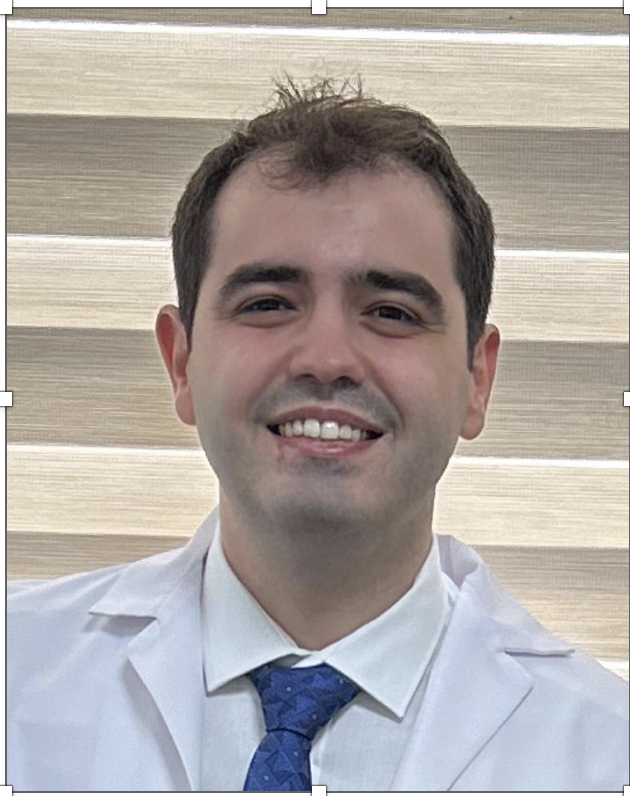
Alper DUNKI
MD
Orthopaedics
University of Health Sciences, Istanbul, Umraniye Training and Research Hospital
Dr. Alper Dünki completed his medical education at Yeditepe University Faculty of Medicine and residency training in Orthopaedics and Traumatology at Tekirdağ Namık Kemal University. His primary fields of interest include orthopaedic oncology and trauma. He currently serves as an orthopaedic surgeon at SBÜ Ümraniye Training and Research Hospital. Dr. Dünki is a member of TOTBİD, the Foot and Ankle Surgery Society, and the Young Orthopaedic Surgeons Group (AGUH). alperdunki@gmail.com
Special Interests
Published Articles
Pathologic Fracture Management
Pathological fractures occur in structurally weakened bone, most commonly due to metastatic disease, but also from primary tumors or metabolic bone disorders. Management begins with accurate diagnosis, staging, and biopsy planning before any surgical fixation. The femur, pelvis, and spine are typical sites, with lung, breast, thyroid, renal, and prostate cancers being leading causes. Predictive tools such as Harrington criteria, Mirel’s score, and CT-based structural rigidity analysis guide the need for prophylactic fixation.
May 2, 2026
Orthoses
Purpose: Support function, control deformity, reduce pain Types: Static: Stabilize joint Dynamic: Facilitate movement Design principles: Simplicity, lightness, durability, aesthetics; consider rigidity/flexibility and tissue tolerance
April 21, 2026
Biomaterials
Biomaterials are synthetic substances, derived from organic or inorganic components, designed to interact with biological systems. Their properties are determined by their structure (elemental composition, atomic bonding, crystalline configuration) and their processing methods (casting, forging, extrusion, sintering, etc.).
April 21, 2026
Bone Grafts, BMP, and Bone Substitutes
April 21, 2026
Clinical Research, Statistical Concepts, and Tests
April 21, 2026
Anticoagulants
April 21, 2026
Musculoskeletal Infections and Microbiology
April 21, 2026
Cellular and Molecular Biology, Immunology and Genetics Terminology
April 21, 2026
Biomechanics
April 21, 2026
Articular Cartilage: Structure, Components, and Clinical Relevance
Spot Knowledge – Articular Cartilage Composition: 95% ECM (water, collagen, proteoglycans), 5% chondrocytes Water: 65–80%, enables load-bearing, nutrient transport Collagen: >50% dry weight, mainly type II (90–95%); tensile strength Proteoglycans: 10–15% dry weight; aggrecan + GAGs provide compressive resilience Zones: Superficial (parallel collagen, friction reduction) Transitional (irregular, load distribution) Deep (vertical, compressive strength) Calcified (anchors to bone) Functions: Low-friction motion, load distribution, joint stability, resistance to forces Clinical relevance: Limited healing (avascular) Water/collagen/PG imbalance → osteoarthritis Collagen II & X defects → chondrodysplasias PG loss → elasticity ↓, cartilage breakdown
April 21, 2026
Peripheral Nerve Structure and Function
April 21, 2026
Articular Cartilage
April 21, 2026
Skeletal Muscle
April 21, 2026
Bone and Joint Biology
April 21, 2026
Pigmented Villonodular Synovitis
Pigmented Villonodular Synovitis (PVNS), also known as tenosynovial giant cell tumor (diffuse type), is a benign but locally aggressive proliferative disorder of the synovium, tendon sheaths, and bursae. It is characterized by hemosiderin deposition, multinucleated giant cells, and synovial villous nodular overgrowth. Although histologically benign, PVNS can cause significant joint destruction if untreated.
March 31, 2026
Chondroblastoma
Chondroblastoma is a rare, epiphyseal, benign bone tumor that exhibits locally aggressive behavior. It primarily affects skeletally immature individuals, most commonly males in their second decade of life. Most frequent locations include the distal femur, proximal tibia, proximal humerus, and less commonly the hip or calcaneus.
March 31, 2026
Imaging Principles
Plain radiography remains the first-line and often diagnostic in most bone tumors, while CT provides detailed cortical and 3D anatomical evaluation. MRI offers superior soft-tissue and marrow contrast, essential for assessing intramedullary extension and surgical margins. PET/CT assist in detecting metastases and evaluating treatment response.
March 30, 2026